 how-to
7 Veteran Home Repair Discounts Worth Claiming Today
Last Updated: October 25, 2026
Quick Summary
Veteran home repair discounts are cost reductions offered by veteran-owned or military-friendly contractors, typically ranging from 5% to 15% off labor, materials, or the total invoice. These discounts provide immediate savings when you book work, and can be combined with grants, low-interest loans, and free repair services for maximum financial relief.
- Contractor discounts typically cover 5% to 15% off labor or materials applied at booking with no repayment required.
- VA grants like Specially Adapted Housing and Special Home Adaptation fund accessibility modifications for eligible service-connected disabilities.
- Verify veteran credentials by requesting a DD Form 214, checking state licensing and insurance independently, and calling references from recent jobs.
- Legitimate veteran discounts rarely exceed 15%; discounts advertised at 30% or 40% off are red flags for inflated estimates.
- Combine assistance types strategically: use grants first for eligible repairs, layer contractor discounts on remaining work, and use loans only for what neither covers.
Table of Contents
- Why Veteran Home Repair Discounts Matter
- Types of Veteran Home Repair Assistance: Discounts, Grants, Loans, and Free Services
- How to Verify a Veteran-Owned Business and Spot Discount Scams
- VA Home Repair Assistance Programs and Eligibility
- Questions to Ask a Home Repair Contractor About Military Discounts
- Veteran Contractor Discounts: What They Cover and What They Don't
- Getting Started: Finding and Booking Your Veteran-Owned Repair Service
- Frequently Asked Questions
Why Veteran Home Repair Discounts Matter
Veteran home repair discounts are real financial relief for people who've served. On a fixed income or juggling multiple repair priorities, a 10% discount on electrical work, plumbing, or weatherproofing adds up quickly, often the difference between a safe home and one with growing problems.
Veterans hiring contractors want reliability, follow-through, and respect for their home. A veteran-owned business often delivers that combination because the owner has lived the experience of depending on people to show up and do the job right.
At Handy Horrigan LLC, we offer a 10% military discount to homeowners in Southwest Ohio. The key is knowing what's available and how to verify it's legitimate.
Types of Veteran Home Repair Assistance: Discounts, Grants, Loans, and Free Services
Veteran home repair assistance comes in four distinct forms, and they work differently depending on your situation and income level.
Contractor discounts are the most straightforward: a veteran-owned or military-friendly business offers 5% to 15% off labor, materials, or both, applied immediately when you book. No application, no waiting, just a reduced invoice.
Grants are funds you don't repay. Nonprofits and government programs award them for roofing, electrical safety work, accessibility modifications, or weatherproofing. Eligibility often depends on income, disability status, or whether the repair addresses a health and safety issue. Applications take time and approval isn't guaranteed, but the relief is substantial.
Low-interest loans bridge the gap for repairs that exceed grant limits or don't qualify. Nonprofits and some government programs offer below-market rates, and the monthly payment is manageable compared to commercial financing.
Free repair services are less common but exist: some nonprofits run volunteer programs where skilled trades workers donate time for critical repairs, usually for low-income, disabled, or over-62 veterans.
Most veterans benefit from combining options: a grant covers roofing, a contractor discount reduces electrical costs, and a low-interest loan covers plumbing that didn't fit the grant criteria.
Veteran home repair assistance comes in four distinct forms, each with different timelines and eligibility requirements.
| Assistance Type | How It Works | Repayment Required |
|---|---|---|
| Contractor Discounts | 5% to 15% off labor, materials, or both applied at booking | No |
| Grants | Funds awarded for roofing, electrical, accessibility, weatherproofing | No |
| Low-Interest Loans | Below-market rates for repairs exceeding grant limits | Yes |
| Free Repair Services | Volunteer skilled trades workers donate time for critical repairs | No |
How to Verify a Veteran-Owned Business and Spot Discount Scams
The veteran-owned label is not federally regulated, so anyone can claim it. Verification matters because scammers exploit that goodwill to charge inflated prices or deliver poor work.
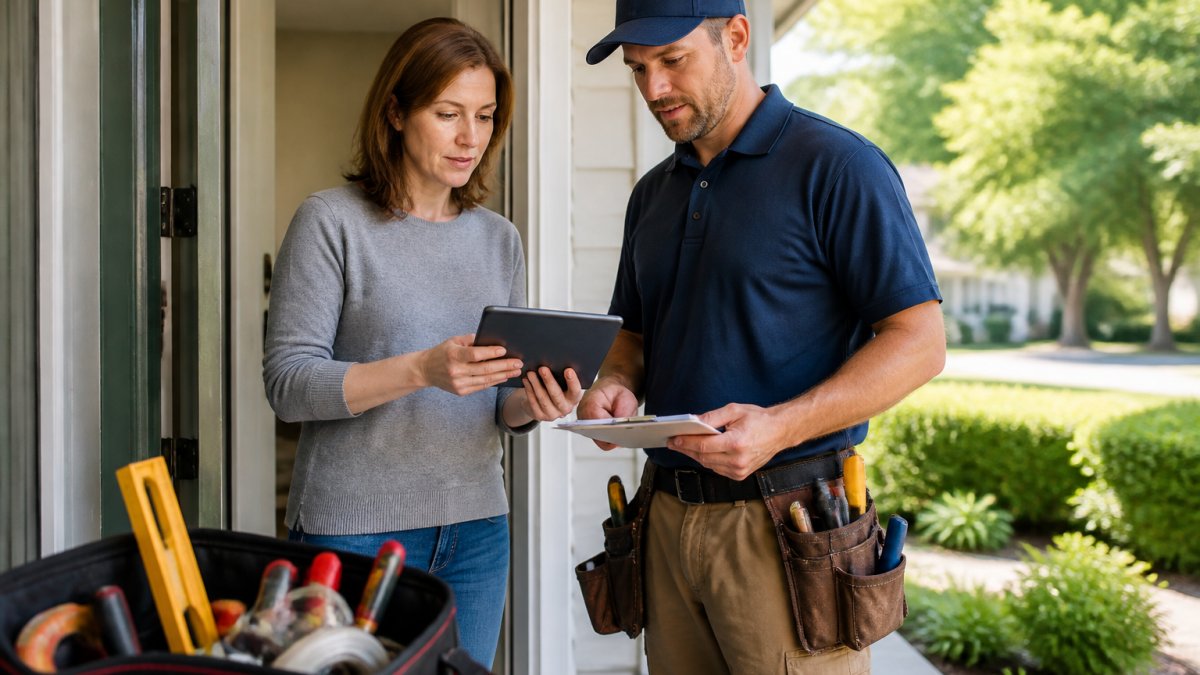
Check for verifiable credentials. Ask the contractor for proof of service, a DD Form 214 (Certificate of Release or Discharge from Active Duty) or military ID.
Verify the discount applies to the work you need. A common scam is offering a "military discount" on the estimate, then charging full price for add-ons or change orders.
Check for licensing and insurance. Veteran status doesn't replace a valid contractor's license and liability insurance. Verify the license with your state board and call the insurer directly to confirm coverage.
Ask for references from recent jobs. Call at least two previous customers: Did the contractor show up on time? Was the work done correctly? Was the quoted price honored? References from other veterans are especially valuable.
Watch out: Scammers sometimes create fake veteran credentials or claim discounts they don't actually offer.
VA Home Repair Assistance Programs and Eligibility
The VA doesn't run a general home repair grant, but it administers two disability-linked housing grants, and nonprofit and state programs fill the gaps. Which bucket you fall into determines where you apply.
Specially Adapted Housing (SAH) Grant. For veterans and service members with certain service-connected disabilities, loss or loss of use of both lower extremities, blindness in both eyes plus loss of one lower extremity, or a similar combination permanently affecting mobility (Disability Housing Grants For Veterans). The maximum amount is set by statute and updated annually, so confirm the current cap on the VA's benefits page before budgeting (Disability Housing Grants For Veterans).
Special Home Adaptation (SHA) Grant. SHA covers service-connected disabilities less severe than the SAH threshold but still requiring adaptations, for example, loss of use of both hands or certain severe burns. The maximum award is lower than the SAH cap and adjusted annually.
How the VA application works. Both grants run through VA Form 26-4555, submitted to your regional VA office with proof of service, disability rating documentation, and a description of proposed modifications (VA Form 26-4555). The VA schedules an inspection and issues a Certificate of Commitment before work begins.
Non-VA programs. State housing finance agencies, county veterans service offices, and nonprofits like Rebuilding Together and Habitat for Humanity often fund roof replacement, electrical safety work, plumbing, and accessibility ramps for low-income veterans regardless of disability status.
Documents to gather before you apply. A DD Form 214 or equivalent discharge paperwork, your VA disability rating letter if you have one, recent tax returns or income statements, a mortgage statement or deed, contractor estimates, and photos of the repair area.
A note on timing. VA grant approvals can take several months, and nonprofit programs often run on annual funding cycles with waiting lists. If a repair is urgent, a failing roof before winter, an electrical hazard, ask whether emergency funds exist and whether you can combine a grant with a contractor discount to close the gap.
Questions to Ask a Home Repair Contractor About Military Discounts
Before booking work, ask these questions to confirm the discount is real and applies to your job.
"What does your military discount cover?" Some contractors discount labor only, leaving materials at full price. Others apply the discount to the total invoice. Get a clear answer in writing.
"Do you honor the discount on change orders?" If the scope of work changes mid-project, does the discount still apply to the additional work? This matters because many repairs uncover hidden problems that require extra work.
"Can you provide references from other military customers?" Contractors who work regularly with veterans should have recent references available. If they can't name a single military customer, that's suspicious.
"Are you a licensed and insured contractor?" Ask for proof, call the insurer to verify the policy is active, and check the state licensing board for a current license and complaints.
"What happens if the work doesn't meet code or fails within a certain timeframe?" Ask about their warranty or guarantee. If they won't commit to fixing problems arising from their work, look elsewhere.
"Do you work with any veteran assistance programs?" Some contractors are familiar with grant programs and can help you navigate the application process. Others may not be.
Veteran Contractor Discounts: What They Cover and What They Don't
A 10% military discount sounds simple, but the difference between a discount on labor and a discount on the whole invoice can be hundreds of dollars on a single job.
What discounts typically cover. Labor is the most common target, and 10% off labor is meaningful on a multi-day job.
What discounts often exclude. After-hours and emergency calls frequently fall outside the discount, same-day scheduling may not qualify, and specialty trades, complex electrical rewiring, structural work, hazardous-material abatement, are sometimes excluded because that portion is subcontracted. Permit fees are almost never discounted.
Typical ranges and what they mean. Most legitimate veteran discounts land in the 5% to 15% range. A 10% discount on a $4,000 labor bill saves $400; the same 10% on a $6,000 total invoice saves $600.
Where the fine print hides. Confirm in writing whether the discount applies to change orders when a repair uncovers hidden damage, to the service-call fee, and if you add work mid-project.
What to avoid. Be skeptical of discounts advertised at 30% or 40% off, legitimate veteran discounts rarely reach that level, and an inflated estimate with a large discount can cost more than a fair estimate with a modest one.
Verifying the discount is real. Ask for the discount in writing on the estimate, confirm the contractor's license and insurance independently, and check recent references. A veteran-owned label is not federally regulated, so the discount is only as good as the contractor standing behind it.
Getting Started: Finding and Booking Your Veteran-Owned Repair Service
Finding a qualified veteran-owned contractor and confirming they're legitimate takes a few steps, but the effort protects you.
Start by asking for referrals. Other veterans in your area can tell you who they've hired, and word-of-mouth is reliable because it comes from someone with similar expectations.
Search online for veteran-owned contractors in your area and check reviews on Google, Yelp, and the Better Business Bureau. Look for patterns: do customers mention reliability, fair pricing, quality work, and military discounts?
Contact at least two contractors and request written estimates. Understanding typical handyman service costs helps you evaluate whether an estimate is reasonable or inflated. Ask the questions above about military discounts, licensing, insurance, and warranty.
Verify credentials before you book: proof of service, licensing, and insurance. Call the insurer and state licensing board to confirm everything is current. This takes 15 minutes and eliminates most scams.
This helps you evaluate whether an estimate is reasonable or inflated.
Once you've chosen a contractor, get the entire agreement in writing: scope of work, total price, military discount amount, timeline, and warranty or guarantee. You can also explore home repair warranty options to protect your investment after the work is complete.
Finding the right veteran-owned contractor doesn't have to be complicated: verify credentials, confirm the discount in writing, and ask questions about experience and guarantees.
Frequently Asked Questions
Do veteran-owned home repair businesses offer discounts?
Yes. Most veteran-owned contractors offer 5-15% discounts on labor for active military, veterans, and sometimes spouses. Some also extend discounts to disabled veterans or offer loyalty pricing for repeat customers. Always confirm the discount applies to your specific repair type before booking, and ask whether it stacks with other promotions or warranty services.
How can I verify that a home repair business is veteran-owned?
Request proof of veteran status or military discharge documentation (DD Form 214). Ask for references from other military customers and confirm their physical address and licensing with your state contractor board.
What VA home repair assistance programs are available?
The VA's Specially Adapted Housing (SAH) grant helps eligible disabled veterans modify homes for accessibility. The Home Improvement and Structural Alteration (HISA) grant covers repairs to existing homes. Eligibility requires service-connected disability ratings and income limits. Many states also offer additional grants and low-interest loans through nonprofit veteran organizations and community programs.
What should I ask a contractor about their military discount?
Ask: (1) What percentage or dollar amount is the discount? (2) Does it apply to labor, materials, or both? (3) Can it combine with other offers or warranties? (4) Is it guaranteed in writing on the estimate? (5) What repairs or project sizes qualify? (6) How do you verify military status, do you accept a military ID, discharge papers, or a letter from the VA? Clear answers protect you from bait-and-switch pricing.