 blog
Best Home Repair Warranty for Homeowners
Last Updated: October 23, 2026
Quick Summary
A home repair warranty is a service contract covering repairs or replacements for major home systems and appliances when they break down from everyday wear and tear, protecting against costs like HVAC replacements exceeding $5,000 or water heaters running $1,200 to $2,500.
- Most plans cover HVAC systems, water heaters, plumbing, electrical systems, and major appliances with service fees typically $75 to $150 per call.
- Premiums range from $15 to $60 monthly or $180 to $720 annually, with total annual cost including service fees and potential cap shortfalls.
- Home repair warranties cover wear and tear failures, while homeowners insurance covers accident and disaster damage, you ideally have both.
- Common denial reasons include pre-existing conditions, improper maintenance, and per-item caps that may leave you covering the difference on replacements.
- Skip a warranty if your home is new, you have substantial repair savings, systems are already failing, you plan to move within two years, or you prefer managing repairs yourself.
Table of Contents
- What Home Repair Warranty Covers and Why It Matters
- Home Warranty Plans and Coverage Options
- Home Warranty Cost: What You'll Actually Pay
- Home Warranty vs. Homeowners Insurance: Key Differences
- Home Warranty Claim Process and Service Experience
- Coverage Exclusions and Limits You Need to Know
- Who Should Skip a Home Warranty
- Conclusion
- Frequently Asked Questions
What Home Repair Warranty Covers and Why It Matters
A home repair warranty is a service contract covering repairs or replacements for major home systems and appliances when they break down unexpectedly.
Most plans cover HVAC systems, water heaters, plumbing, electrical systems, and major appliances.
The appeal is straightforward: a new water heater runs $1,200 to $2,500, and an HVAC replacement can exceed $5,000. For homeowners who want predictable expenses, a home repair warranty offers peace of mind.
Home Warranty Plans and Coverage Options
A basic plan covers HVAC, water heater, plumbing, and electrical. Mid-level plans add kitchen and laundry appliances, refrigerators, ranges, dishwashers, washers, dryers.
Your needs depend on your home's age and condition: newer homes may only need a basic plan, while older homes with aging appliances often need broader coverage.
Contracts also vary on replacement versus repair: some providers repair an appliance multiple times before replacing it, others replace once repair costs exceed 50% of replacement cost.
Home Warranty Cost: What You'll Actually Pay
Home warranty plans involve two costs: the premium and the service fee you pay when you call for repairs.
Premiums vary by coverage level and location, typically $15 to $60 per month, or $180 to $720 annually if paid upfront.
To calculate total annual cost, add the premium to your expected service calls: at $40 monthly (about $480 annually) plus two $100 claims, you spend $680.
Not every repair gets covered, though.
Home Warranty vs. Homeowners Insurance: Key Differences
Many homeowners confuse home repair warranties with homeowners insurance, but they protect against different risks.
Homeowners insurance covers damage from accidents, natural disasters, theft, or vandalism, a storm-damaged roof or a burst pipe flooding your basement.
Home repair warranty covers repairs when systems and appliances fail from normal wear and tear, a dead air conditioner in summer or a failed refrigerator compressor.
Insurance claims go through your insurer, which investigates before paying.
Home Warranty Claim Process and Service Experience
Filing a home warranty claim is straightforward on paper: call your provider, describe the problem, and they schedule a network technician. The details determine whether a claim takes two days or two weeks.
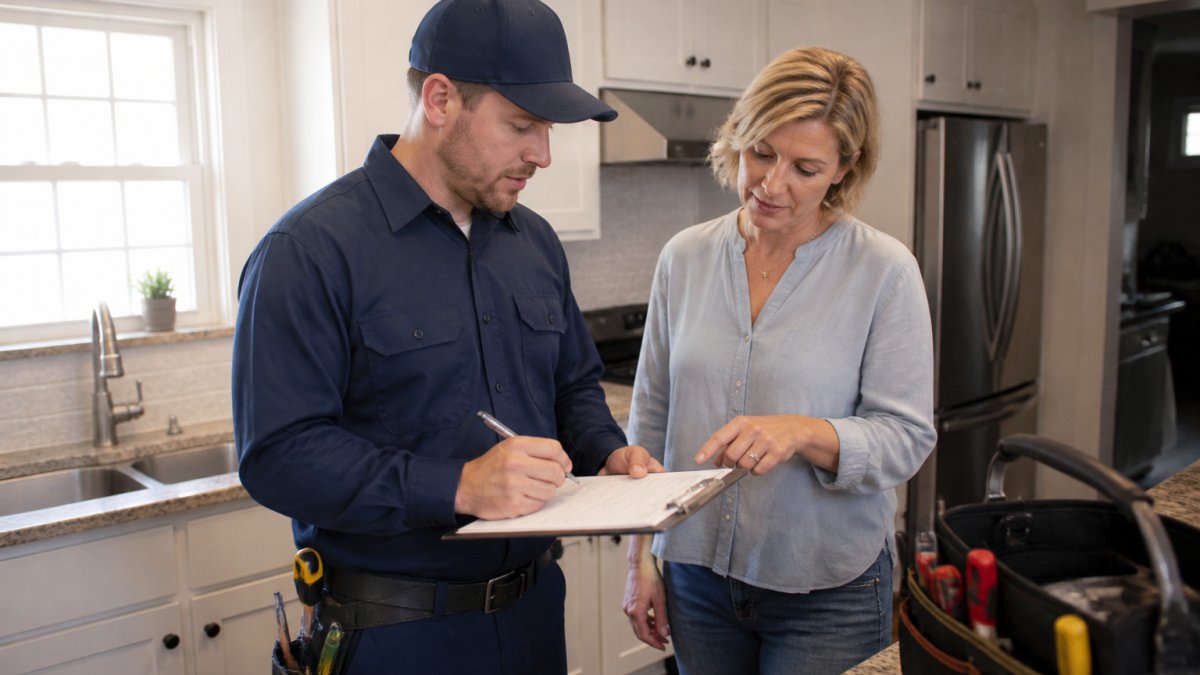
The step-by-step claim workflow
Most providers follow a similar sequence, though timing and authorization rules vary:
- File the claim. Call the claims line or submit through a portal or app. Describe the symptom, not the diagnosis, "the furnace blows cold air" rather than "the igniter failed." Have your contract number and the appliance's make, model, and age ready.
- Pay or authorize the service fee. Many providers collect the $75 to $150 fee when you file or when the technician is dispatched; some bill at the visit. Confirm which applies.
- Get a technician assigned. The provider dispatches a network contractor, typically within 24 to 48 hours for standard claims, with same-day or next-day service for no-heat, no-cool, or active water leaks. Ask whether emergency dispatch carries a higher fee.
- Diagnose and authorize. The technician diagnoses the failure and reports to the provider, which authorizes repair, replacement, or denial. This step is where delays happen, because the contractor cannot proceed until the provider approves the scope and cost.
- Repair or replace. If authorized, the contractor performs the repair. If the unit is not repairable or the repair cost exceeds the replacement threshold, the provider arranges replacement, sometimes subject to a cap and sometimes requiring you to cover the difference.
- Close the claim and confirm the workmanship guarantee. Get the repair documented in writing and confirm the guarantee period, commonly 30 to 90 days. If the same failure recurs inside that window, the return visit should carry no additional service fee.
Where claims actually go sideways
The friction points are predictable, and knowing them helps you avoid surprises:
- Authorization delays. The contractor diagnoses on day one, but the provider may take additional business days to approve a repair or replacement. Ask your provider for its stated authorization turnaround and whether you can escalate a stalled claim.
- Pre-existing condition disputes. If the technician notes rust, prior repairs, or a unit that was already failing, the provider may deny the claim as a pre-existing condition. Document your systems' condition at purchase and keep maintenance records.
- Improper maintenance denials. A provider may deny an HVAC claim if you cannot show filter changes or annual service. Keep receipts and a simple maintenance log.
What to ask before you buy
Because the claims experience is where a warranty succeeds or fails, ask these questions before signing:
- What is the standard dispatch window, and is emergency service available at a higher fee?
- How long does authorization typically take for a repair versus a replacement?
- Is there a workmanship guarantee, and how long does it last?
A plan with a broad coverage list but a slow authorization process and thin contractor network will disappoint you at the worst possible moment. A plan with slightly narrower coverage but fast dispatch and clear caps is often the better buy.
A realistic timeline example
A common pattern: file Monday, technician dispatched Wednesday, diagnosis of a failed blower motor reported the same day, repair authorized Thursday, work completed Friday, roughly four to five business days. Replacement claims take longer because the provider must approve, order, and schedule installation, stretching to one to three weeks. Plan for that during a heat wave or cold snap, when contractor availability tightens.
Coverage Exclusions and Limits You Need to Know
Every home warranty excludes items and limits payouts, reducing actual protection. The headline coverage list is marketing; the exclusions, caps, and denial rules are the contract. Reading them before you buy is the difference between a plan that pays and one that disappoints.
The exclusion categories that cause most denials
Most denials fall into a handful of predictable categories:
- Pre-existing conditions. Problems that existed before coverage started are typically excluded. If your air conditioner was already short-cycling when you bought the plan, a claim for that unit is likely to be denied. Document your systems' condition at purchase with photos and a recent service record.
- Improper maintenance or neglect. If you never changed the HVAC filter or skipped annual service, the provider may deny the claim. Keep receipts and a maintenance log.
- Cosmetic damage. Dents, scratches, and discoloration are not covered if the appliance still functions.
How caps actually work
Coverage caps come in two forms, and both reduce what you receive:
- Per-item caps. A plan might cap water heater replacement at $1,500. If the installed replacement costs $2,200, you cover the $700 difference. The same logic applies to HVAC replacements, where caps are often higher but still below full replacement cost.
- Annual payout caps. Some plans limit total payouts per year, for example $5,000. Once the provider pays that amount, additional claims in the coverage period are denied until renewal.
Total annual cost: a worked example
Headline premiums understate actual spending. Realistic annual cost combines premium, service fees, and likely out-of-pocket gaps:
| Cost component | Example amount | Notes |
|---|---|---|
| Annual premium | $480 | About $40 per month for a mid-level plan |
| Service fees (2 claims) | $200 | $100 per visit |
| Cap shortfall on one replacement | $700 | $2,200 replacement minus $1,500 cap |
| Total annual outlay | $1,380 | Before any uncovered items |
Compare that $1,380 to the repairs you actually needed. With two claims and one capped replacement, the warranty likely saved money versus paying $2,200 out of pocket plus the second repair. With one minor claim, premium and fees may have exceeded the repair cost. The math favors you when you need at least one major repair, and works against you when your systems are healthy.
Denial scenarios worth rehearsing
Walk through these before you buy so you know how your plan would respond:
- Your 16-year-old HVAC fails in July. If the provider finds rust or prior repairs, the claim may be denied as pre-existing. Ask about age limits and pre-existing language for older systems.
- Your refrigerator compressor fails but the unit is a high-end brand. Confirm the brand is eligible and whether a per-item cap applies.
- Your water heater leaks and replacement requires a permit and code upgrade. Confirm whether the permit and code work are covered or excluded.
Questions that surface the real limits
Ask these before signing, and get the answers in writing:
- What is the per-item cap for HVAC, water heater, plumbing, and electrical?
- Is there an annual payout cap, and how much is it?
- How are pre-existing conditions defined, and what documentation do you require?
The answers reveal a plan's real value better than any coverage list. A broad list with low caps and strict pre-existing language protects you less than a narrower list with generous caps and clear rules.
Who Should Skip a Home Warranty
Home warranties make sense for many homeowners, but they're not right for everyone.
Skip a warranty if your home is new and under a builder's or manufacturer's warranty.
Skip a warranty if you have significant savings for repairs.
Skip a warranty if your systems are already failing or near end-of-life.
Skip a warranty if you plan to move within two years. Most warranties don't transfer to new owners, and short ownership periods mean low probability of needing repairs. The premium becomes a sunk cost.
Skip a warranty if you're handy and comfortable managing repairs yourself.
Weigh your home's age, finances, plans to stay, and comfort managing repairs.
| Coverage Type | Best For | Skip If |
|---|---|---|
| Basic systems only | Homes with newer HVAC and water heater | Appliances are aging and need coverage |
| Mid-level with appliances | Homes 10-20 years old with mixed-age systems | Home is very new or very old |
| Comprehensive coverage | Older homes with aging systems and appliances | You plan to move within 2 years |
| Add-on coverage (pool, well) | Homes with specialty systems | Systems are already failing or pre-existing |
Conclusion
A home repair warranty protects against the unpredictable cost of system and appliance failures, offering peace of mind and predictable expenses. The right plan depends on your home's age, finances, and whether you value convenience over self-managing repairs.
When unexpected breakdowns happen, coverage means you call a contractor, pay a service fee, and the warranty handles the rest. Whether you choose warranty coverage or manage repairs yourself, understanding your options ensures you're protected when systems fail.
Frequently Asked Questions
What does a home repair warranty cover for homeowners?
A home repair warranty typically covers the cost of repairs or replacement for major home systems and appliances that fail due to normal wear and tear. Coverage usually includes HVAC systems, water heaters, electrical systems, plumbing, refrigerators, ovens, and washers/dryers, depending on your plan. However, warranties exclude pre-existing conditions, damage from lack of maintenance, and cosmetic issues. Review your specific plan details to understand exactly what systems and appliances are covered under your selected coverage level.
How much does a home warranty cost per month?
Home warranty monthly premiums vary widely based on coverage level, the number of systems and appliances included, and your location. Basic plans typically cost less than comprehensive plans that cover more systems. In addition to the monthly premium, you'll pay a service fee (also called a trade-call fee) each time a technician is dispatched, usually ranging from $50 to $150 per visit. Total annual costs depend on how often you file claims. Request quotes from multiple providers to compare actual pricing for your specific needs.
What is the difference between a home warranty and homeowners insurance?
Homeowners insurance protects against sudden, accidental damage to your home's structure and belongings (fire, theft, storms). A home warranty covers the cost of repairs or replacement when major systems and appliances fail due to normal wear and tear. Insurance is required by mortgage lenders; a warranty is optional. They serve different purposes: insurance handles catastrophic events, while a warranty handles expected mechanical failures. Many homeowners carry both for comprehensive protection.
What should you check before filing a home warranty claim?
Before filing a claim, verify that the failed system or appliance is covered under your specific plan and hasn't been excluded due to pre-existing conditions or lack of maintenance. Check your coverage limits to ensure the repair cost doesn't exceed your plan's payout cap. Review the claims process timeline, most providers require you to contact them within a set timeframe after a failure occurs. Gather documentation of the failure (photos, service history) and have your policy number ready. Confirm the service fee amount you'll owe at the time of the service call.